

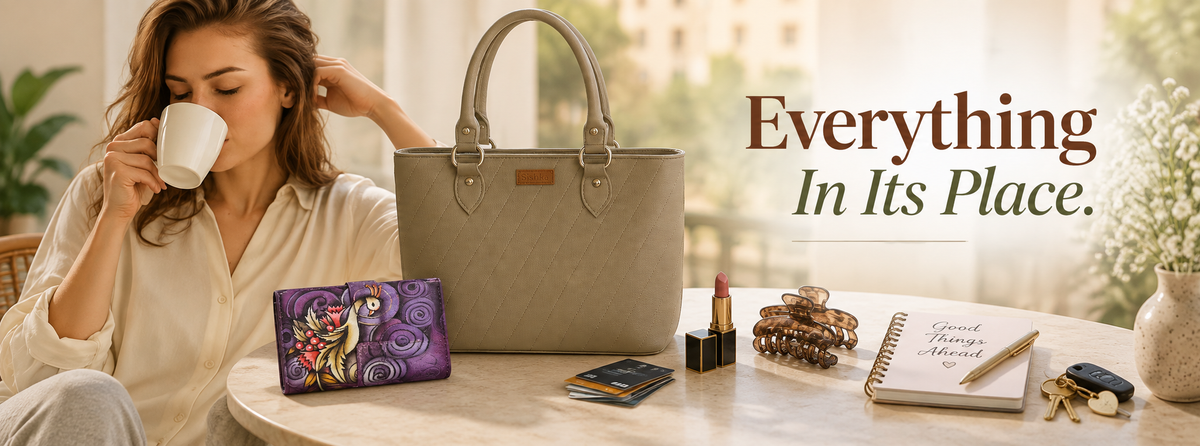
How to Organize a Handbag So Everything Is Easy to Find
A handbag can make everyday life easier, but it can also become frustrating when your phone disappears under your wallet, your keys get buried at the bottom, or you have to search through several items just to find one small thing. The good news is that you do not need a larger bag to solve the problem. With a simple organization system and the right handbag compartments, you can keep your essentials easy to find and make better use of the space you already have.
Whether you carry a shoulder bag, crossbody bag, tote bag, satchel, hobo bag, or another everyday handbag, organizing it according to how you use each item can make a noticeable difference. The goal is not to make your handbag perfectly arranged every minute of the day. Instead, it is to create a practical system that makes it easy to put things away and find them again.
Start by Taking Everything Out of Your Handbag
The easiest way to organize a handbag is to start with an empty bag. Take everything out and place the contents where you can see them clearly. This gives you an opportunity to notice what you actually carry every day and what has simply accumulated inside the bag.
You may find old receipts, unused cosmetics, loose coins, shopping cards, empty packaging, or other items that you no longer need. Removing these things immediately creates more space and makes the rest of the organization much easier.
Once your handbag is empty, separate your belongings into simple groups such as essentials, personal care items, technology, money, and items you use occasionally. This will help you decide where each category should go when you put everything back.
Keep Your Most-Used Items Within Easy Reach
Your most frequently used belongings should always have the easiest access. Items such as your phone, keys, wallet, and travel card are usually taken out several times throughout the day, so placing them at the bottom of your bag does not make sense.
If your crossbody bag, shoulder bag, or satchel has an outside pocket or easily accessible interior compartment, use it for these frequently used items. Your phone can have its own pocket, while your keys can stay in a secure zip compartment or attached key holder if your bag has one.
Creating a dedicated place for these essentials means you will eventually know exactly where to reach without having to search through the entire handbag.
Give Your Wallet Its Own Space
Your wallet is one of the most important items in your handbag, so it should have a consistent place. If your bag has a dedicated compartment that fits your wallet comfortably, use it every time.
A wallet should ideally remain easy to access without being mixed together with cosmetics, chargers, receipts, or other small belongings. If you frequently change between different handbags, keeping your wallet in a consistent location can also make switching bags much easier.
For customers who prefer carrying fewer items, a wristlet or compact wallet can provide a convenient alternative when a full-sized wallet is unnecessary.
Use Small Pouches for Loose Items
Small items can quickly make a handbag look messy because they tend to move around inside the main compartment. Instead of placing everything directly into your bag, use small pouches and cosmetic pouches to group similar items together.
For example, you can keep lip products, hand cream, and other personal-care items in one pouch. Cables, earbuds, and a charger can go into another small organizer. This keeps loose items together and makes it much easier to move them between handbags.
A cosmetic pouch is particularly useful for keeping beauty products contained so that they do not become mixed with your wallet, keys, or other everyday belongings.
Keep Your Cosmetics Together
If you carry makeup or personal-care products, keeping them in one place can save a surprising amount of time. A cosmetic pouch allows you to keep lipstick, compact powder, hand cream, perfume, or other small beauty essentials together instead of allowing them to spread throughout the main compartment.
Choose a pouch that is large enough for what you actually use. A pouch that is too large can take up unnecessary space, while one that is too small may become difficult to close or organize.
The same principle applies to other personal items. Grouping similar belongings together helps you find what you need without emptying your entire everyday handbag.
Create a Dedicated Place for Your Keys
Keys are among the easiest items to lose inside a handbag because they are small and can quickly fall beneath larger belongings.
If your handbag has a zippered pocket, key holder, or small interior compartment, use it specifically for your keys. If it does not have one, consider placing your keys in a small pouch or another consistent location.
The important part is consistency. Once you decide where your keys belong, put them back in the same place every time you return them to your handbag.
Keep Your Technology Together
Chargers, earbuds, cables, power banks, and other small technology accessories can easily become tangled with everything else in a handbag. Keeping them together can make your bag much easier to manage.
A small accessory pouch can hold your charging cable, earbuds, and other technology essentials. Larger items such as a power bank can go into a dedicated compartment where they will not press against smaller or more delicate belongings.
If you regularly carry a tablet or laptop, a tote bag or larger work bag with a dedicated technology compartment can provide more practical organization than a small handbag.
Use the Main Compartment for Larger Essentials
The main compartment of your handbag should be reserved for items that are larger and do not require constant access. Depending on your routine, this might include sunglasses, a notebook, a small water bottle, a book, or other everyday belongings.
Avoid filling the main compartment with dozens of small items because this makes everything harder to locate. When small belongings have their own pockets or pouches, the main compartment can remain more open and easier to use.
This is especially helpful with a tote bag, because its larger interior can otherwise become difficult to navigate when it is filled with many unrelated items.
Keep Heavy Items at the Bottom
When organizing a handbag, think about weight as well as accessibility. Heavier belongings should generally sit lower in the bag so that the handbag remains more balanced when you carry it.
For example, a power bank or heavier personal item can be placed toward the bottom of the main compartment, while your phone, wallet, and other frequently used belongings remain higher and easier to reach.
A balanced handbag can also feel more comfortable on your shoulder or arm, particularly when you are carrying it for several hours.
Do Not Fill Every Pocket Just Because It Is There
Having multiple handbag compartments does not mean that every pocket needs to be filled. Too many items spread across too many compartments can actually make your handbag harder to use.
Instead, give each compartment a clear purpose. One pocket can be for your phone, another for keys, and another for cards or small personal items. When each space has a specific function, you will quickly learn where everything belongs.
This approach works particularly well with crossbody bags and shoulder bags, where limited space makes efficient organization especially important.
Keep Emergency Items Together
You may occasionally need items that are important but not used every day. These might include tissues, pain-relief essentials, bandages, a small sewing item, or other personal necessities.
Rather than allowing these items to move around the handbag, keep them together in a small pouch. This allows you to carry useful emergency items without making them difficult to find.
You can also adjust the contents depending on your plans. A long travel day may require different items from a short shopping trip, so your handbag organization should be flexible enough to change with your routine.
Organize Your Handbag According to Your Daily Routine
The best handbag organization system is the one that matches the way you actually use your bag.
If you spend most of your day commuting, keep your travel card, keys, phone, and wallet in the easiest-to-reach locations. If you work from an office, your notebook, charger, and other work essentials may deserve dedicated compartments.
For travel, you may need more organization because you are likely to carry additional items. A roomy tote bag or practical satchel can be useful when you need space for several belongings, while a crossbody bag may be more convenient when you want to carry only your essentials.
There is no single perfect organization system for everyone. Your handbag should be arranged around your own habits.
Remove Items You Are Not Using Regularly
A handbag becomes difficult to organize when it contains items that you rarely use. Before leaving home, think about whether you actually need everything you are carrying.
If you carried a book yesterday but will not have time to read today, you may be able to leave it at home. If you are carrying several cosmetics but only regularly use two or three, consider taking only the products you need.
Reducing unnecessary weight can make your everyday handbag more comfortable and leave more room for the things that matter.
Clean Your Handbag Regularly
Organization is easier when your handbag is clean. Once every week or two, depending on how frequently you use the bag, empty it and remove receipts, packaging, crumbs, dust, and other unwanted items.
This small habit prevents clutter from building up and gives you an opportunity to check whether your current organization system is still working.
It is also a good time to check your handbag compartments and make sure frequently used items have remained in their designated places.
Make Switching Between Handbags Easier
Many women regularly switch between handbags depending on their outfit, destination, or plans. If you move every item individually from one bag to another, it can be easy to forget something important.
Using a few small pouches can make the process much simpler. Your cosmetics can stay together in one cosmetic pouch, while your technology accessories can remain together in another. You can then move these groups between your shoulder bag, crossbody bag, tote bag, or other handbag without having to reorganize everything from scratch.
Keeping your most important essentials together also reduces the chance of leaving your wallet, keys, or other necessities behind.
Choose a Handbag That Supports Organization
Good organization begins with the bag itself. If you regularly carry several essentials, look for a handbag with compartments that match your needs.
A crossbody bag can be useful when you want easy access to a smaller number of essentials. A shoulder bag may provide more room for everyday belongings, while a tote bag can be better suited to work, shopping, or situations where you need additional capacity.
The right handbag does not have to have dozens of pockets. What matters is having enough practical storage to keep your belongings separated and accessible.
Final Thoughts
Learning how to organize a handbag does not require a complicated system. The most effective approach is to remove unnecessary items, group similar belongings together, give frequently used essentials an easy-to-reach location, and return everything to the same place after using it.
Whether you carry a crossbody bag, shoulder bag, tote bag, satchel, hobo bag, or everyday handbag, organizing your belongings according to your routine can make your bag more comfortable and much easier to use.
A well-organized handbag saves time, reduces daily frustration, and helps you make better use of the space you already have. Once you find an arrangement that works for you, maintaining it becomes a simple everyday habit.
Leave a comment