

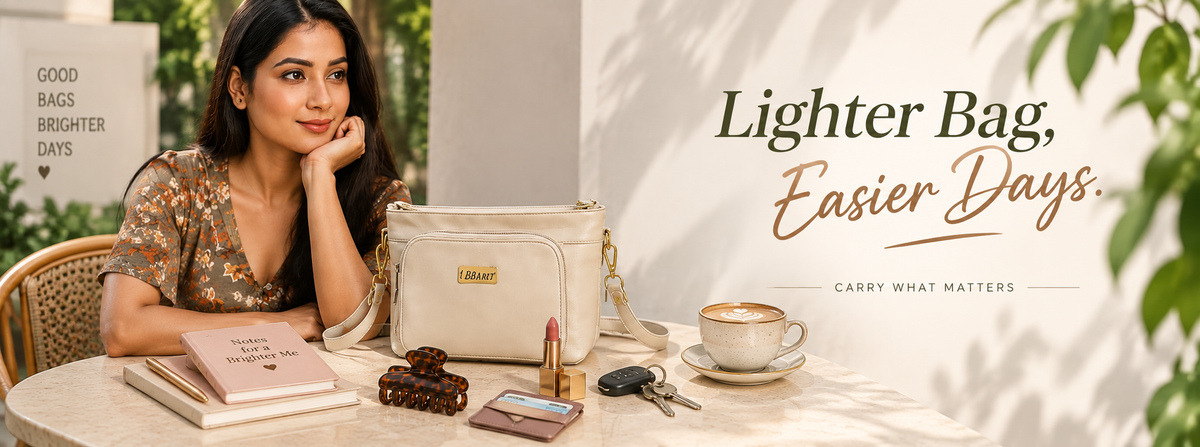
How to Keep Your Handbag from Becoming Too Heavy
A handbag can quickly become much heavier than expected when everyday essentials, receipts, cosmetics, chargers, keys, and other small items begin collecting inside it. What starts as a practical everyday handbag can eventually become difficult to carry, especially when you use the same bag from morning until evening.
Keeping your handbag light does not mean carrying fewer useful things. It means choosing what you actually need, organizing your belongings properly, and avoiding items that have slowly found their way into your bag without a real purpose. With a few simple habits, your women’s handbag can remain comfortable, practical, and easier to manage throughout the day.
Start by Emptying Your Handbag Completely
The easiest way to reduce the weight of your handbag is to take everything out and start fresh. Over time, bags often collect items that are no longer needed, such as old receipts, loose coins, expired coupons, empty cosmetic containers, packaging, and things you carried for a specific occasion but never removed afterward.
Once everything is outside the bag, separate the items into three groups: things you need every day, things you occasionally need, and things that can stay at home. This simple process can make a noticeable difference without requiring you to change the way you use your favorite handbag.
Carry Only the Essentials You Actually Use
Your daily essentials will depend on your routine, but most people do not need to carry every possible item throughout the day. A phone, wallet, keys, identification, and a few personal necessities may be enough for many everyday outings.
If you regularly carry several beauty products, multiple pairs of sunglasses, spare accessories, notebooks, or other items "just in case," consider whether you actually use them during a typical day. Removing even a few unnecessary items can make your handbag lighter and easier to carry.
Choose the Right Wallet
A wallet can take up more space and add more weight than many people realize. If you carry a large wallet filled with cards, receipts, coins, and old membership cards, it may be worth switching to a more compact women’s wallet that matches your actual needs.
Keep the cards you use regularly and remove expired cards, old receipts, and unnecessary paper. If you normally carry only a few cards and some cash, a compact wallet may provide everything you need without taking up unnecessary room inside your purse or handbag.
Keep Your Cosmetics Under Control
Cosmetics and personal-care products can gradually become one of the heaviest categories inside a handbag. Carrying several full-size products when you only use one or two during the day can add unnecessary weight.
Consider keeping a small selection of products that you genuinely use while you are away from home. A compact cosmetic pouch can also help keep these items together, making it easier to remove the entire pouch when you do not need it.
Remove Receipts and Paper Regularly
Receipts are small, but they can accumulate quickly. A few days of shopping receipts can turn into a surprisingly thick collection of paper at the bottom of your bag.
Make it a habit to remove receipts and other unnecessary paper regularly. If you need to keep a particular receipt, store it somewhere specifically designated for important documents instead of allowing it to accumulate inside your everyday bag.
Avoid Carrying Multiple Bags Within Your Handbag
Small pouches and organizers can be extremely useful, but carrying too many separate bags inside one handbag can add unnecessary weight. Consider whether you need several organizers or whether one practical pouch can keep your smaller belongings together.
The goal is not to remove organization from your handbag. Instead, choose handbag organizers and pouches that provide useful storage without adding unnecessary bulk.
Keep Your Handbag Organized
A well-organized handbag is usually easier to manage than one where everything is mixed together. When belongings are scattered throughout the main compartment, it can be tempting to keep adding items because you cannot immediately see what is already inside.
Use the available compartments to separate frequently used items such as your phone, keys, wallet, and cosmetics. A structured handbag with practical compartments can make everyday organization much easier and help you notice when unnecessary items begin accumulating.
Think About Your Day Before You Leave Home
The contents of your handbag should reflect your plans for the day. If you are going to work, you may need different items than you would for a quick lunch, shopping trip, or evening outing.
Before leaving home, think about where you are going and what you will realistically need. If you are only going out for a few hours, there may be no reason to carry everything you would normally take for a full working day.
Choosing a handbag for everyday use according to your schedule can help prevent unnecessary weight from building up.
Use Different Handbags for Different Needs
There is no reason to make one handbag handle every situation. A larger tote bag may be useful when you need to carry a notebook, water bottle, or other larger belongings, while a crossbody bag may be more suitable when you want to carry only your basic essentials.
A smaller shoulder bag can also be a practical choice for occasions when you want a little more space than a compact crossbody but do not need a large carryall.
Using different handbag styles according to the occasion can help you avoid carrying a large bag simply because it is your usual choice.
Be Careful With "Just in Case" Items
One of the biggest reasons handbags become heavy is the number of things people carry because they might need them.
A spare notebook, extra charger, multiple pens, several beauty products, backup accessories, and other emergency items can all seem reasonable individually. Together, however, they can add significant weight.
If you have not used an item for several weeks, ask yourself whether it really needs to stay in your handbag every day. You can always add something when you know you will need it rather than carrying it continuously.
Pay Attention to the Weight of the Handbag Itself
The contents are not the only factor. The handbag itself contributes to the total weight you carry.
If you frequently carry many belongings, choosing a lightweight handbag can give you more flexibility because more of the total weight comes from your essentials rather than the bag itself.
This can be particularly useful for everyday handbags, shoulder bags, tote bags, and work bags that you carry for several hours.
Consider Comfort When Choosing a Handbag
A handbag can be relatively light and still feel uncomfortable if the handle or strap does not suit the way you carry it. Comfortable handbag straps and appropriately positioned handles can make a noticeable difference when a bag is used throughout the day.
For a shoulder or crossbody style, look for a strap that sits comfortably and allows the bag to remain balanced. For a tote or handbag carried by hand, consider whether the handles feel comfortable when the bag contains your usual belongings.
The right combination of handbag size, weight, handle design, and storage can make everyday carrying much easier.
Make a Weekly Handbag Clean-Out a Habit
You do not need to completely reorganize your handbag every day. A quick weekly clean-out can be enough to prevent unnecessary items from building up.
Remove receipts, packaging, empty containers, loose change, and anything you no longer need. Then check whether the items remaining in the bag are still appropriate for your current routine.
This small habit can help you maintain a clean and organized handbag without having to deal with a heavy and cluttered bag later.
Keep Your Everyday Bag Practical and Stylish
Keeping your handbag light does not mean giving up on style. A stylish everyday handbag can still provide enough storage for the things you genuinely need without becoming oversized or overloaded.
When choosing a new handbag, think about how much you normally carry, where you will use it, and whether the design provides the right amount of storage. A bag that matches your lifestyle will usually be more useful than one chosen only because it has a large interior.
Final Thoughts
A heavy handbag is often the result of small items accumulating over time rather than one particularly heavy object. By removing unnecessary belongings, choosing a practical wallet, controlling cosmetics, clearing receipts, and selecting a handbag that matches your daily routine, you can make your bag considerably easier to carry.
The right women’s handbag should support your lifestyle rather than become another burden during the day. Whether you prefer a tote bag, shoulder bag, crossbody bag, satchel, or compact handbag, keeping the contents organized and intentional will help you enjoy the bag for longer and carry it more comfortably.
1 comment
Thanks!
Donna Koob
Leave a comment