

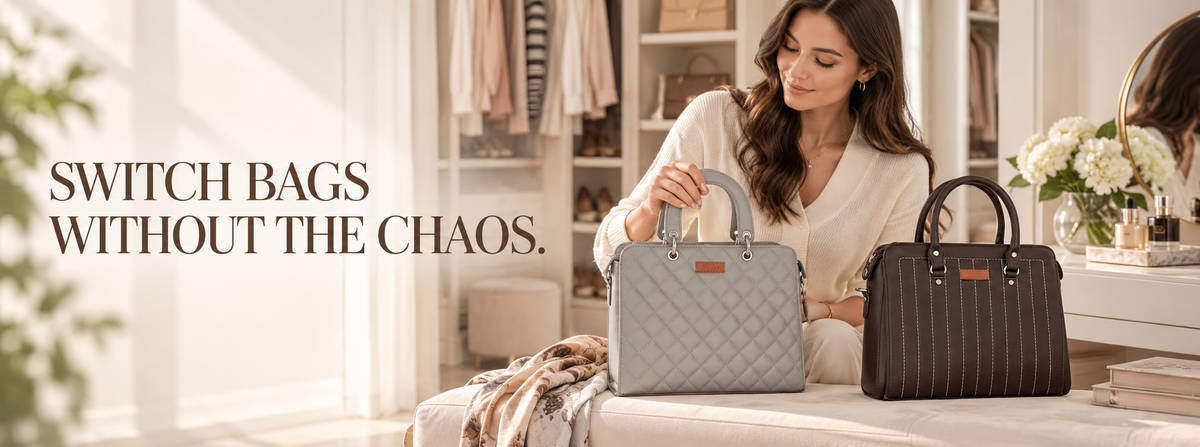
How to Switch Your Essentials from One Handbag to Another
Changing your handbag should be an easy way to refresh your outfit or choose a bag that better suits your plans, but it can quickly become frustrating when your everyday belongings are scattered between several bags. A wallet left in yesterday's tote, keys hiding in a small pocket, or a favorite lipstick forgotten in another purse can turn a simple bag change into a search mission.
The solution is not to carry fewer things simply for the sake of being organized. Instead, create a flexible system that allows your everyday handbag essentials to move easily from one bag to another. Once you know what belongs in your daily kit and what should stay with a particular handbag, changing bags becomes much quicker and less stressful.
Think of Your Essentials as One Portable Collection
Rather than treating every handbag as a completely separate storage space, think of your most-used belongings as one collection that travels with you. Your phone, wallet, keys, sunglasses, cards, cosmetics, personal-care items, and other daily necessities can form your basic collection, while occasional items can be added depending on where you are going.
This approach works particularly well if you rotate between a large handbag for work, a crossbody bag for weekends, a shoulder bag for everyday outfits, or a smaller purse for evenings. Your essential collection stays consistent, while the bag changes around it.
Separate Everyday Items From "Just in Case" Items
One of the biggest reasons handbags become difficult to switch is that they often contain far more than we actually use. Old receipts, duplicate lip products, unused coupons, random hair accessories, spare packaging, and forgotten items can gradually take over the available space.
Before switching bags, empty your current handbag completely and divide everything into two groups: items you genuinely use regularly and items you are carrying only because you might need them someday. Your daily handbag essentials should move with you, while occasional items can remain at home or be stored separately.
This simple distinction makes it much easier to decide what belongs in a smaller handbag and prevents unnecessary weight from following you everywhere.
Create a Small "Core Kit"
Instead of transferring ten or fifteen individual items every time, create a small handbag essentials kit that contains the things you use most often. A compact pouch, organizer, or zippered case can hold smaller belongings such as cards, cosmetics, personal-care products, charging accessories, or other items that tend to move between bags.
When you decide to change handbags, the core kit can move with you in one step. You can then add anything specific to the occasion, such as a notebook for work or sunglasses for an outdoor outing.
This method is especially useful for people who own several women's handbags and like changing their accessories frequently.
Let the Occasion Decide What You Carry
Your handbag does not need to contain the same things every day. The contents should change according to your plans.
For a normal day of errands, you may only need your phone, wallet, keys, sunglasses, and a few personal items. A workday may require additional space for a notebook, charger, cosmetics, or other necessities. An evening event may call for a much smaller selection.
When choosing your handbag for the day, first think about what you will actually be doing. Then select the bag and contents together rather than trying to force your entire collection of belongings into whichever handbag you happen to choose.
Use the "One-Minute Switch"
If you change bags frequently, give yourself a simple one-minute routine. Start by taking your wallet, phone, keys, and essential pouch from the old bag. Check the interior and exterior pockets once, then place those items into your new handbag.
After that, add only the things required for your plans that day. This prevents you from repeatedly emptying and reorganizing every part of your handbag.
The routine becomes easier with practice because each important item has a predictable place.
Give Important Items a Familiar Home
Your handbag may change, but the location of your essentials can remain familiar.
For example, you might always keep your wallet in an interior pocket, your keys in a zipped compartment, and your phone in an easy-access pocket. When you use a different handbag, look for equivalent spaces rather than randomly placing everything inside.
Consistent placement means you will know where to reach when you need something, even when you are carrying a completely different bag.
Downsize Without Losing What Matters
Moving from a large tote to a compact crossbody handbag requires a little more thought. Instead of taking everything from the larger bag, decide which items are essential for the shorter outing.
You might transfer your phone, slim wallet, keys, one or two cosmetics, and sunglasses while leaving a notebook, larger cosmetic case, or other unnecessary items behind. The goal is not to carry as little as possible; it is to carry what makes sense for the occasion.
This also helps a smaller bag maintain its shape and remain comfortable to carry.
Keep a Separate Set of Occasional Items
Some things do not need to move between handbags at all. If you frequently use a particular item only for work, travel, or specific occasions, keeping it separate can save time.
For example, work-related accessories can stay together in a dedicated pouch, while travel documents and travel accessories can remain in a separate location. When that particular occasion arrives, you can add the appropriate collection to your handbag without disturbing your everyday setup.
This is particularly useful for people who regularly alternate between work handbags, travel bags, casual handbags, and evening bags.
Don't Forget the Small Things
Large belongings are usually easy to remember, but small items are often what get left behind. Hair ties, earbuds, lip balm, hand cream, keys, charging cables, and cards can easily disappear into the corners of a handbag.
Using small compartments or pouches for these items keeps them together and makes them easier to transfer. It also prevents the bottom of your handbag from becoming a collection of unrelated small objects.
Give Your Handbags a Quick Reset
Instead of waiting until your handbag becomes completely cluttered, give it a quick reset whenever you change to another bag. Remove receipts, wrappers, empty packaging, unwanted papers, and anything that does not belong there.
This means the handbag you are putting away is already clean and ready for the next time you use it. You will also know that anything remaining in the bag has a reason to be there.
A regular reset takes only a few minutes but can make your handbag collection much easier to manage.
Choose the Right Bag for the Day
The easiest way to switch handbags is to choose the bag based on what you need rather than choosing the bag first and trying to make everything fit afterward.
A spacious tote bag may make sense for a busy workday or shopping trip, while a shoulder bag may be more suitable for a casual lunch or day out. A compact crossbody can be convenient when you want to walk around without carrying a larger handbag.
When the bag matches the occasion, you naturally carry fewer unnecessary items and the entire experience becomes more comfortable.
Make Your Handbag Collection Work Together
Owning several handbags does not have to mean maintaining several completely different sets of belongings. Your collection can work as a flexible system in which the same core essentials move between different styles.
A neutral everyday handbag may be your regular choice, while a colorful shoulder bag can refresh a weekend outfit. A structured work bag can provide more space when needed, while a smaller crossbody can make an evening look feel lighter.
Keeping your essentials portable allows you to enjoy the variety of your handbag collection without creating extra work every time you change your look.
A Simple Checklist Before You Leave
Before walking out with your new handbag, take a quick mental check of the things you cannot afford to forget. Your phone, wallet, keys, identification, and any essential medication or personal items should be considered first.
Then think about the specific plans for the day. If you are working, commuting, shopping, traveling, or attending an event, add only what you genuinely expect to use.
This small pause can prevent the most common handbag-switching mistake: arriving somewhere and realizing that an important item is still sitting in the previous bag.
Final Thoughts
Switching handbags becomes much easier when you stop treating each bag as a separate storage system. Your most important belongings can travel as one organized collection, while the size and style of your handbag can change according to your outfit, schedule, and destination.
A small organizer or pouch can keep your handbag essentials together, while consistent placement makes important items easier to find. Regularly removing unnecessary belongings also keeps your bags lighter and more enjoyable to use.
Whether you are moving from a spacious work tote to a compact crossbody or simply choosing a different handbag to complement your outfit, a simple system lets you enjoy your handbags without spending unnecessary time searching through them.
Leave a comment