

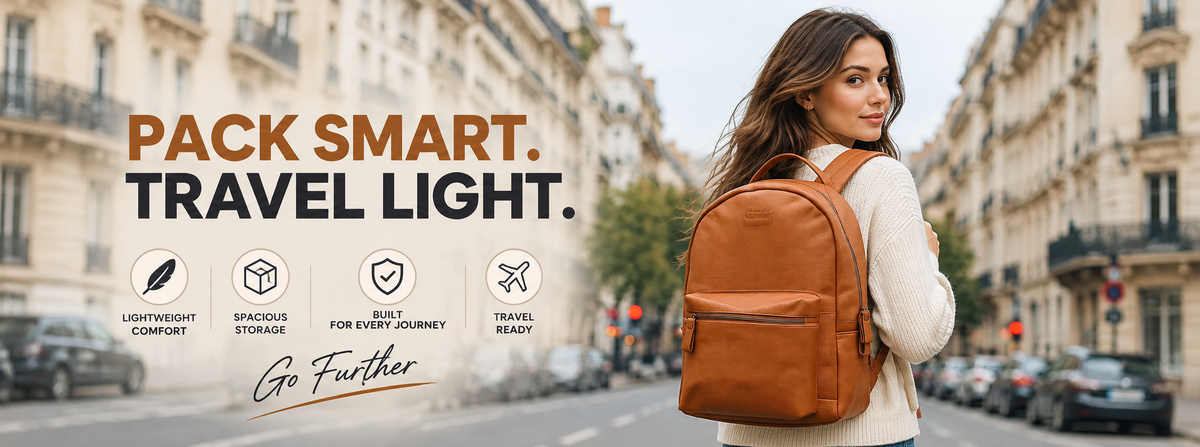
How to Organize a Backpack for a Day of Travel
A day of travel is much easier when everything you need has a place. Whether you are exploring a new city, taking a weekend day trip, visiting family, heading to a nearby destination, or spending the day sightseeing, an organized travel backpack can keep your essentials accessible without making your bag unnecessarily heavy.
The key is not to pack everything you might possibly need. Instead, choose the items that genuinely belong in your day and arrange them so that the things you use most often are easy to reach. With the right backpack organization, you can spend less time searching through your bag and more time enjoying your trip.
Start With the Essentials
Before putting anything into your day travel backpack, think about what you will actually need from morning until evening. Your list may include your phone, wallet, keys, identification, travel documents, sunglasses, water bottle, snacks, personal care items, a charger, and any medication or other personal necessities you normally carry.
Once you have identified your essentials, remove items that are unlikely to be useful. Carrying fewer unnecessary belongings makes your backpack lighter and leaves more room for things you may pick up during the day.
A lightweight backpack can be particularly useful for day travel because it allows you to carry your essentials comfortably without adding unnecessary weight before you have even packed your belongings.
Use Different Compartments for Different Items
If your travel backpack has multiple compartments, use them according to the type of item rather than placing everything wherever there happens to be space.
Keep frequently used belongings such as your phone, wallet, keys, and travel documents in an easily accessible pocket. Larger items can stay in the main compartment, while smaller belongings can be grouped into interior pockets or pouches.
This simple approach makes backpack organization much easier because you begin to remember where everything belongs. Instead of opening every section when you need something, you can reach directly for the appropriate compartment.
Keep Your Most Important Items Easy to Reach
There are certain belongings you may need several times throughout the day. Your phone, wallet, identification, tickets, transit card, and keys should not be buried underneath clothing or other items.
Place these essentials in a front backpack pocket or another secure compartment that you can access quickly. If your backpack has a zippered pocket, it can be especially useful for smaller valuables that you want to keep organized and secure.
Keeping frequently used items near the top or in an accessible pocket also prevents you from repeatedly unpacking your entire backpack just to find one small item.
Pack Heavier Items Close to Your Back
How you arrange the weight inside your backpack can affect how comfortable it feels while walking.
Place heavier items closer to your back rather than allowing them to sit far away from your body. Lighter items can be placed around them or toward the outer sections of the bag.
For example, a compact camera, book, tablet, or other heavier item can be positioned toward the middle of the backpack, while a light jacket or scarf can fill some of the remaining space.
A well-organized everyday backpack should feel balanced when you carry it. If the weight constantly pulls backward or shifts from side to side, rearranging the contents can make a noticeable difference.
Create a Dedicated Space for Electronics
Travel often involves carrying several electronic devices and accessories. Your phone, power bank, charging cable, headphones, camera, or tablet can quickly become tangled together if they are all placed in the same compartment.
Use a dedicated section of your travel backpack for electronics whenever possible. Small cable organizers or pouches can also keep charging cables and headphones together.
Keeping electronics separate from water bottles, snacks, cosmetics, and other items can make your backpack easier to manage and help prevent accidental spills from reaching your devices.
Carry a Water Bottle Without Losing Space
Staying hydrated is important during a day of walking and sightseeing, but a water bottle can take up valuable space inside your backpack.
If your daypack has an exterior bottle pocket, use it instead of placing the bottle inside the main compartment. This keeps the bottle accessible and leaves more room for your other belongings.
An exterior pocket can also make it easier to take your bottle out without opening the main compartment every time you need a drink.
Keep Snacks Separate
A few snacks can be useful when you are traveling for an entire day, especially when you are unsure when you will have your next meal.
Keep snacks in a small pouch or separate compartment so crumbs and packaging do not spread throughout your backpack. If you are carrying fruit or other items that could leak or become messy, use appropriate packaging before placing them in the bag.
This is a small step, but it can make backpack organization much easier and keep the rest of your belongings cleaner.
Pack a Light Layer for Changing Weather
Weather can change during the day, particularly when you are traveling between different locations.
A lightweight jacket, cardigan, scarf, or compact rain layer can be useful depending on your destination and the forecast. Instead of wearing an extra layer throughout the day, you can keep it inside your travel backpack until you need it.
Place soft clothing toward the top or outer part of the main compartment so it can be removed easily without disturbing heavier or more important items underneath.
Keep Personal Care Items Together
Small personal items can quickly make a backpack feel disorganized when they are scattered throughout different pockets.
Create one small section for items such as tissues, hand sanitizer, lip balm, sunscreen, a comb, or other personal care products you regularly use. A compact pouch can keep these items together and make them easier to locate.
For longer day trips, this type of organization can be particularly helpful because you may need these items while you are away from home for several hours.
Protect Travel Documents and Valuables
Your identification, tickets, cards, and other important documents deserve their own secure space.
Keep travel documents in a zippered compartment rather than leaving them loose inside the main section of your backpack. If you are carrying cash or other valuable small items, keep them in a secure interior pocket that is not immediately visible when the backpack is opened.
The goal is to make important belongings both easy to locate and less likely to get lost among your other items.
Use Small Pouches to Group Loose Items
One of the easiest ways to improve backpack organization is to group similar items together.
Instead of allowing chargers, cosmetics, stationery, cables, and small personal belongings to move freely around the main compartment, use separate pouches for each category.
For example, one pouch can hold technology accessories, another can hold personal care items, and another can contain small travel necessities. This makes it easier to transfer your essentials between different bags when needed.
Leave Some Room for the Day
It can be tempting to fill every available space in your backpack before leaving home. However, leaving a little extra room can make your day more convenient.
You may buy a book, pick up a small souvenir, remove a layer of clothing, or need somewhere to store something you were carrying separately. A backpack with a little spare capacity gives you greater flexibility.
A versatile backpack should accommodate the unexpected without becoming overloaded.
Avoid Packing Items You Will Not Use
A common packing mistake is preparing for every possible situation. Carrying too many "just in case" items can make a daypack unnecessarily heavy.
Before leaving, look through your backpack once more and ask whether each item has a realistic purpose for the trip. If you are unlikely to use something and it is not an essential item, consider leaving it at home.
A carefully selected collection of belongings is usually easier to manage than a backpack packed to its maximum capacity.
Choose a Backpack That Matches Your Day
Good organization begins with choosing the right backpack for travel. A short sightseeing trip may only require a compact daypack, while a full day involving work, shopping, photography, or outdoor activities may require more storage.
Consider the size, number of compartments, strap design, handle, closure, and overall construction before choosing your backpack. If you regularly carry a laptop or tablet, look for suitable protective storage. If you mainly carry personal essentials, a lighter and more compact design may be more appropriate.
Your backpack should support your routine rather than forcing you to change how you carry your belongings.
Make a Simple Packing System
Once you find an arrangement that works, use the same basic system each time you travel.
Keep valuables in one secure compartment, electronics together, personal care items in one pouch, and frequently used belongings where they are easy to reach. Place heavier items close to your back and lighter items around them.
This organized backpack setup becomes easier with practice. Eventually, you will know where your essentials belong without having to think about it.
Final Thoughts
Organizing a backpack for a day of travel does not require complicated packing techniques. The most useful approach is to carry only what you need and give each category of belongings a logical place.
Keep frequently used essentials accessible, place heavier items close to your back, separate electronics from liquids, use smaller pouches for loose belongings, and leave some room for anything you may pick up during the day.
Whether you are carrying a travel backpack, everyday backpack, or compact daypack, good organization can make the bag more comfortable and your entire travel day easier. When the right items are packed in the right places, you can spend less time searching through your bag and more time enjoying where you are going.
Leave a comment